Crowdfunding live on MakerWorld

Print a piece of another world — or the night sky you remember.

Two tools, both built on real data. OrbitStudio Terrain turns NASA elevation data of the Moon and Mars, and five more worlds, into a jigsaw puzzle or an ornament; OrbitStudio Sky turns a star catalogue into the exact sky over any place, at any moment. Either way, you print it yourself.

See plans and pricing

Plus from $9.99 a month. One plan, both tools. Or a lifetime pass on MakerWorld, still on sale as a late pledge.

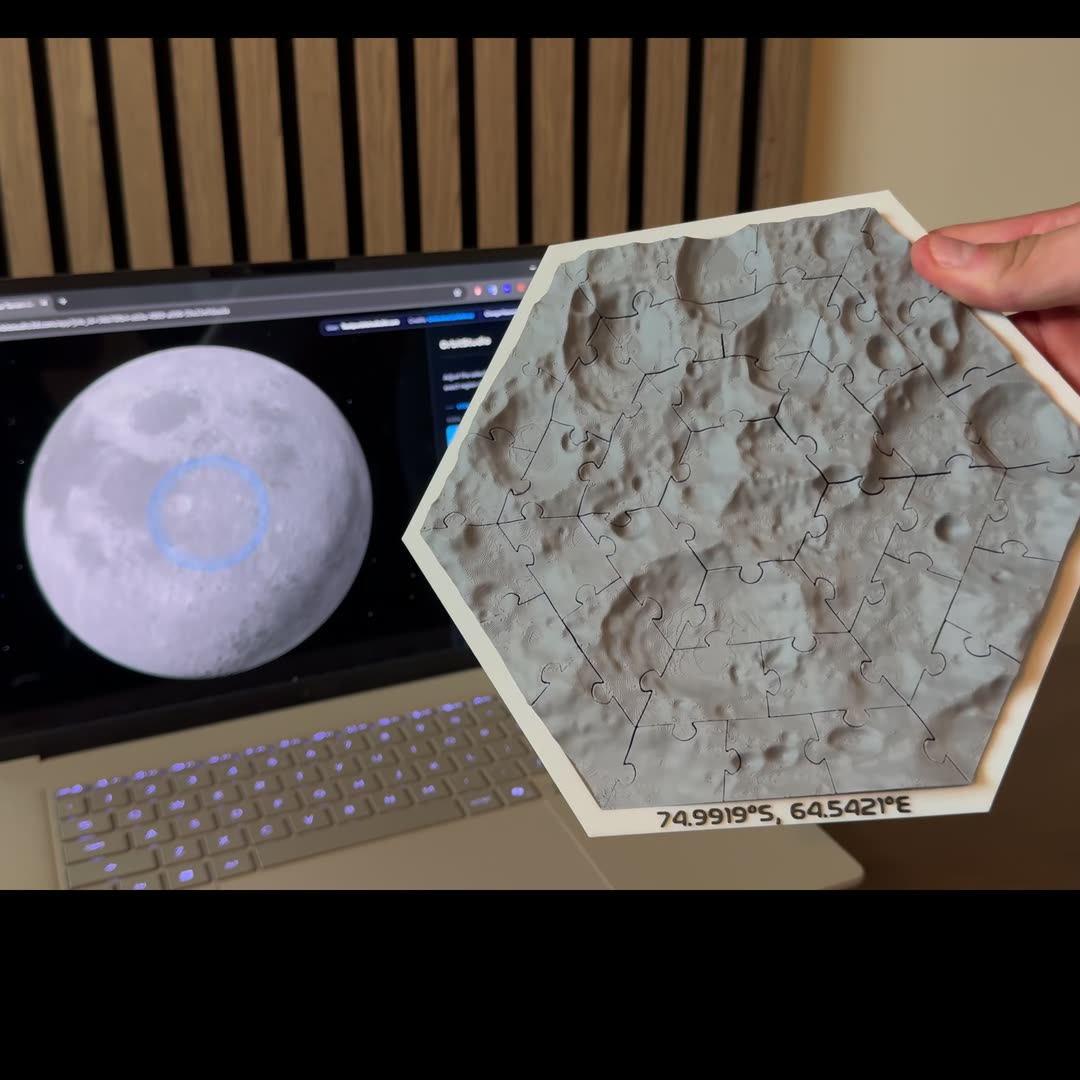
A hand holding a printed hexagon Moon jigsaw puzzle, lettered 74.9919°S, 64.5421°E, in front of a laptop running OrbitStudio
74.9919°S 64.5421°E · Moon
A printed OrbitStudio Sky star map on a wooden desk: a dark gray plate with a white border and copper constellation lines, lettered The Night Sky, New York, United States, 28th June 2017 at 20:00
40.7127°N 74.0060°W · 28·06·2017
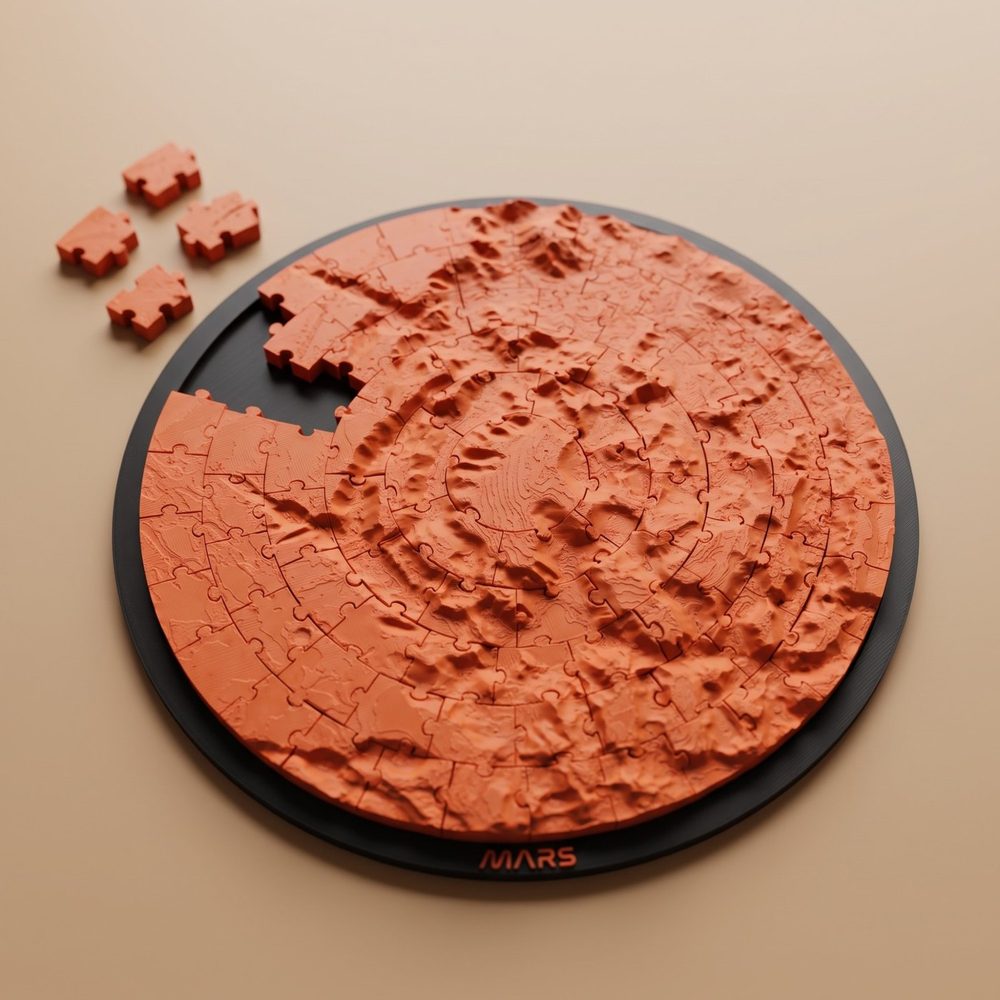
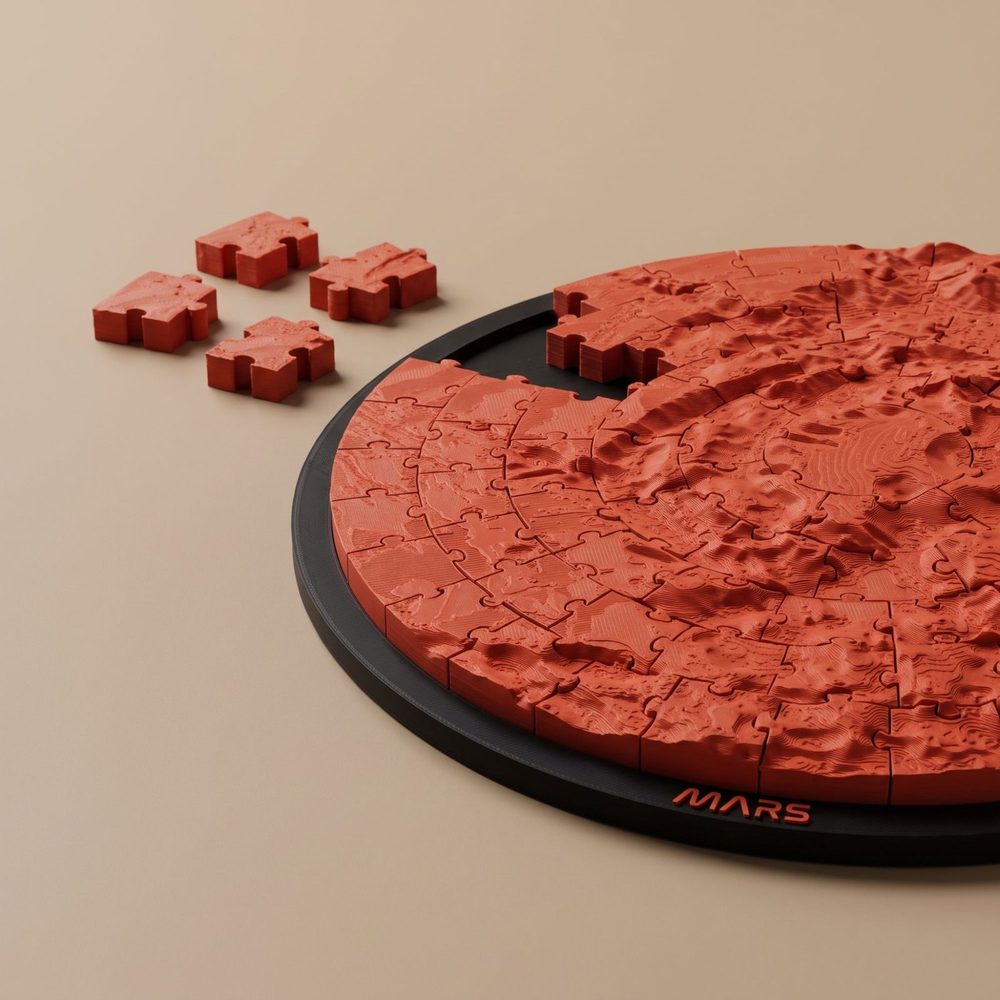
A round Mars terrain jigsaw puzzle in red on a black frame lettered MARS, with four pieces lifted out and lying beside it
Mars · round puzzle
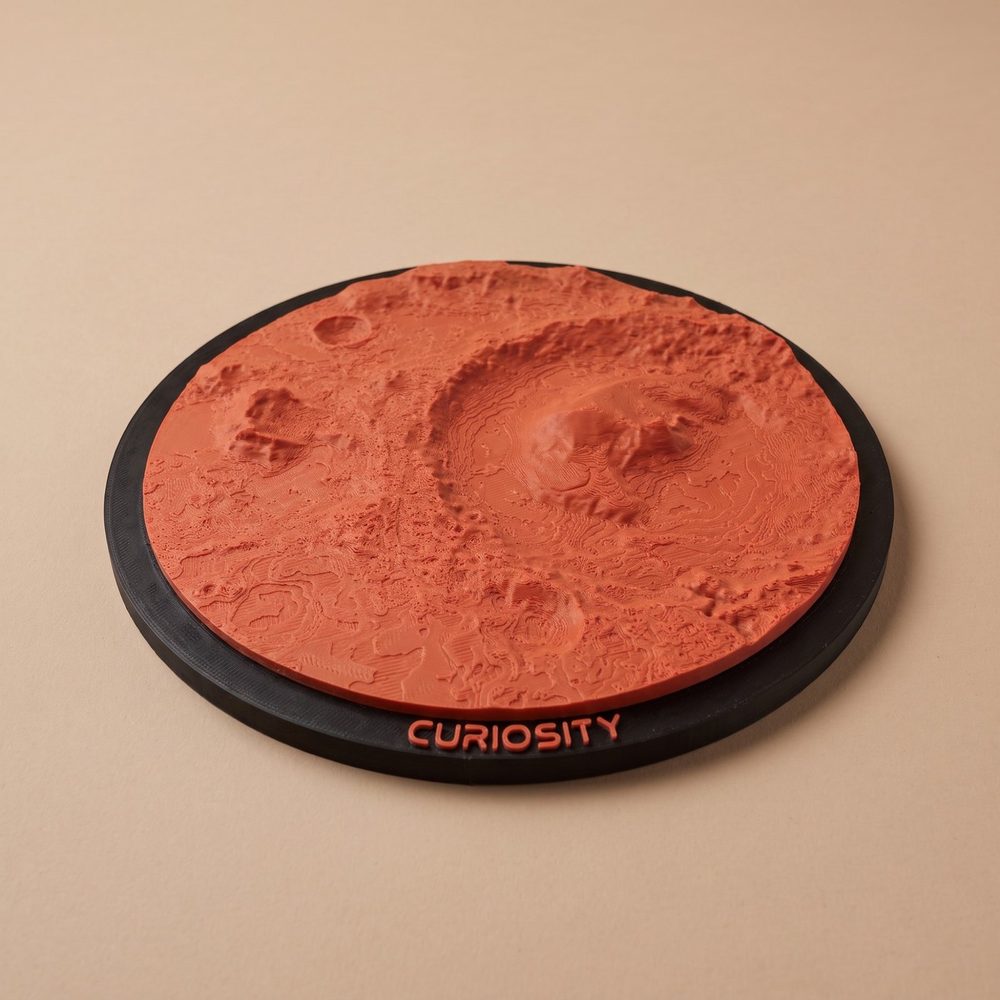
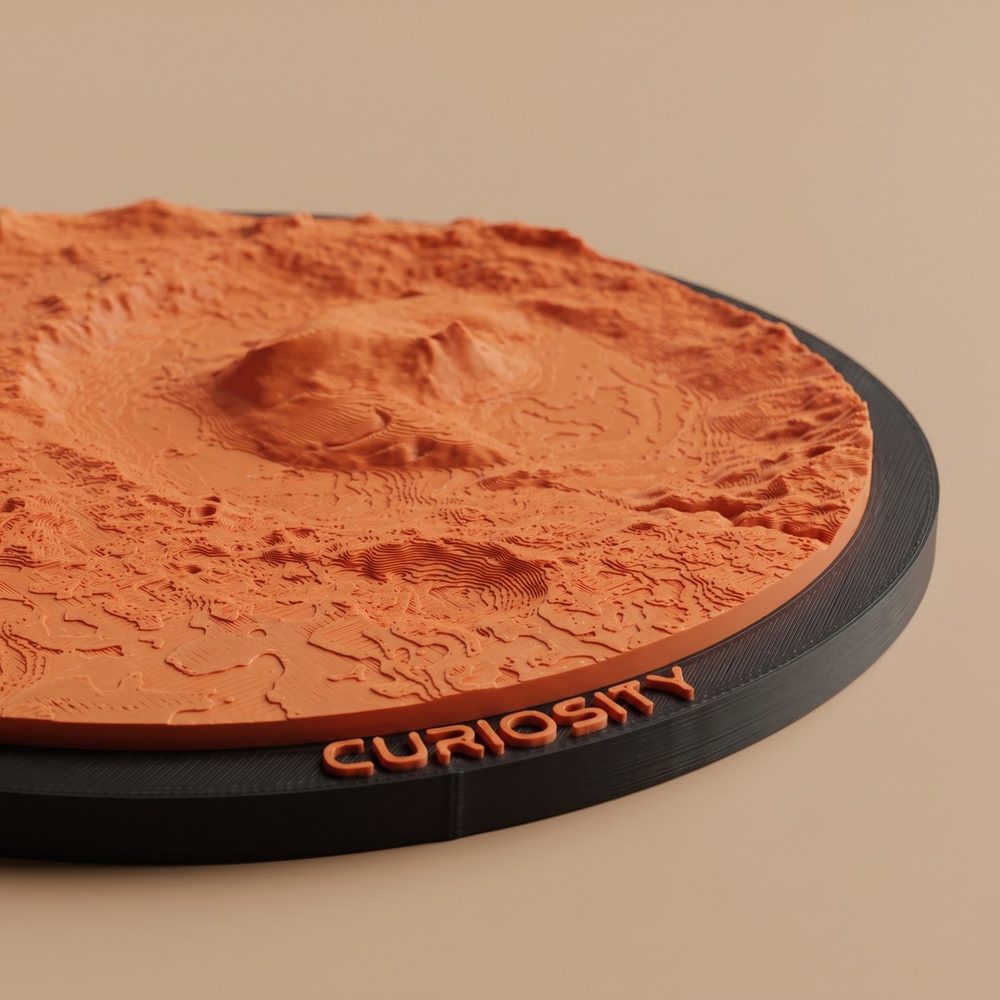
A round Mars ornament of the Curiosity landing site: Gale crater with Mount Sharp in the middle, in red on a black frame with CURIOSITY in raised letters
Gale crater · Mars
Terrain
NASA mission data
Stars
Bright Star Catalogue
Files
STL · multicolor 3MF

Pick the ground or the sky

Both run in your browser and start from published science data. Generating a model is free in either one.

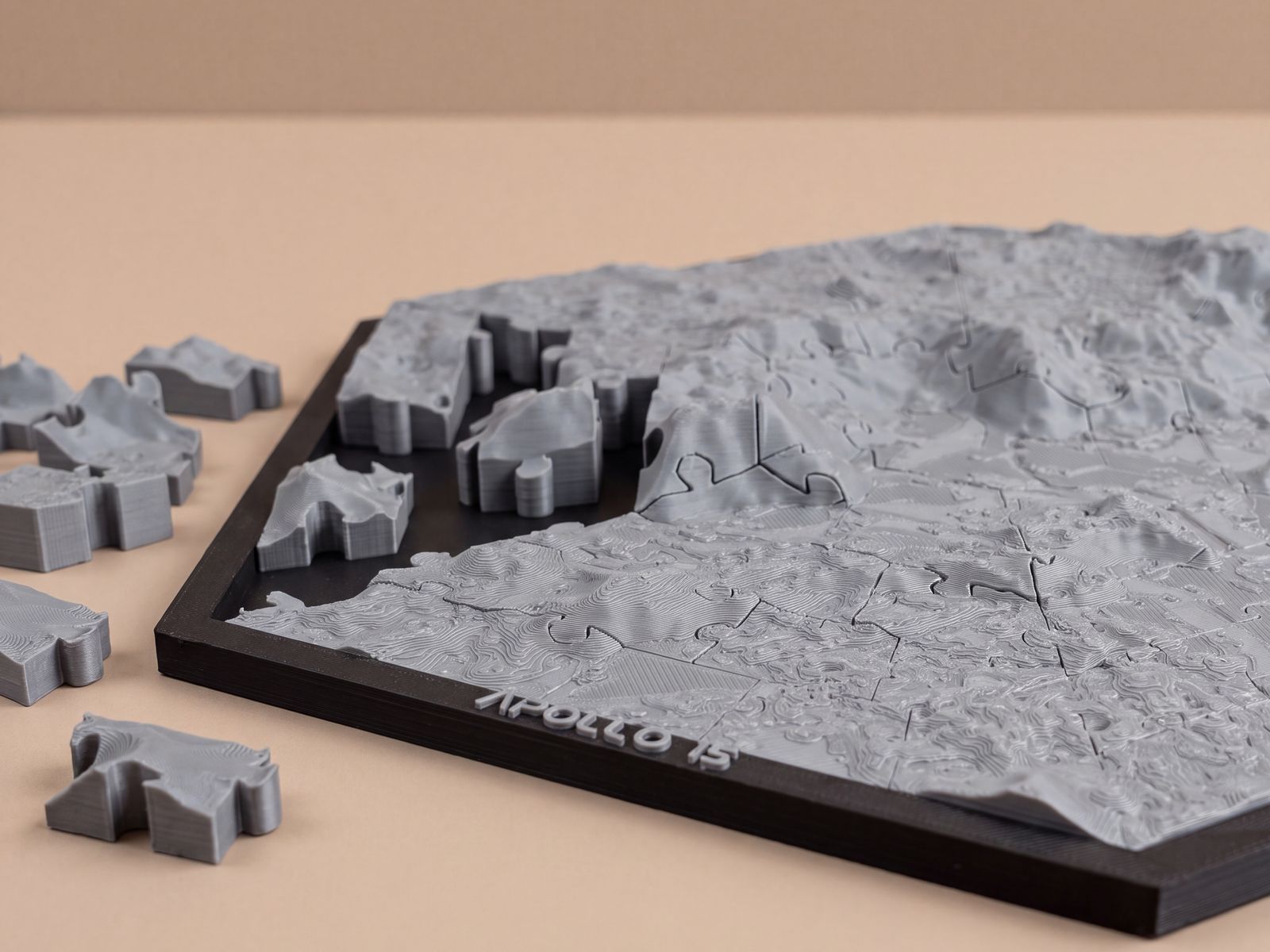
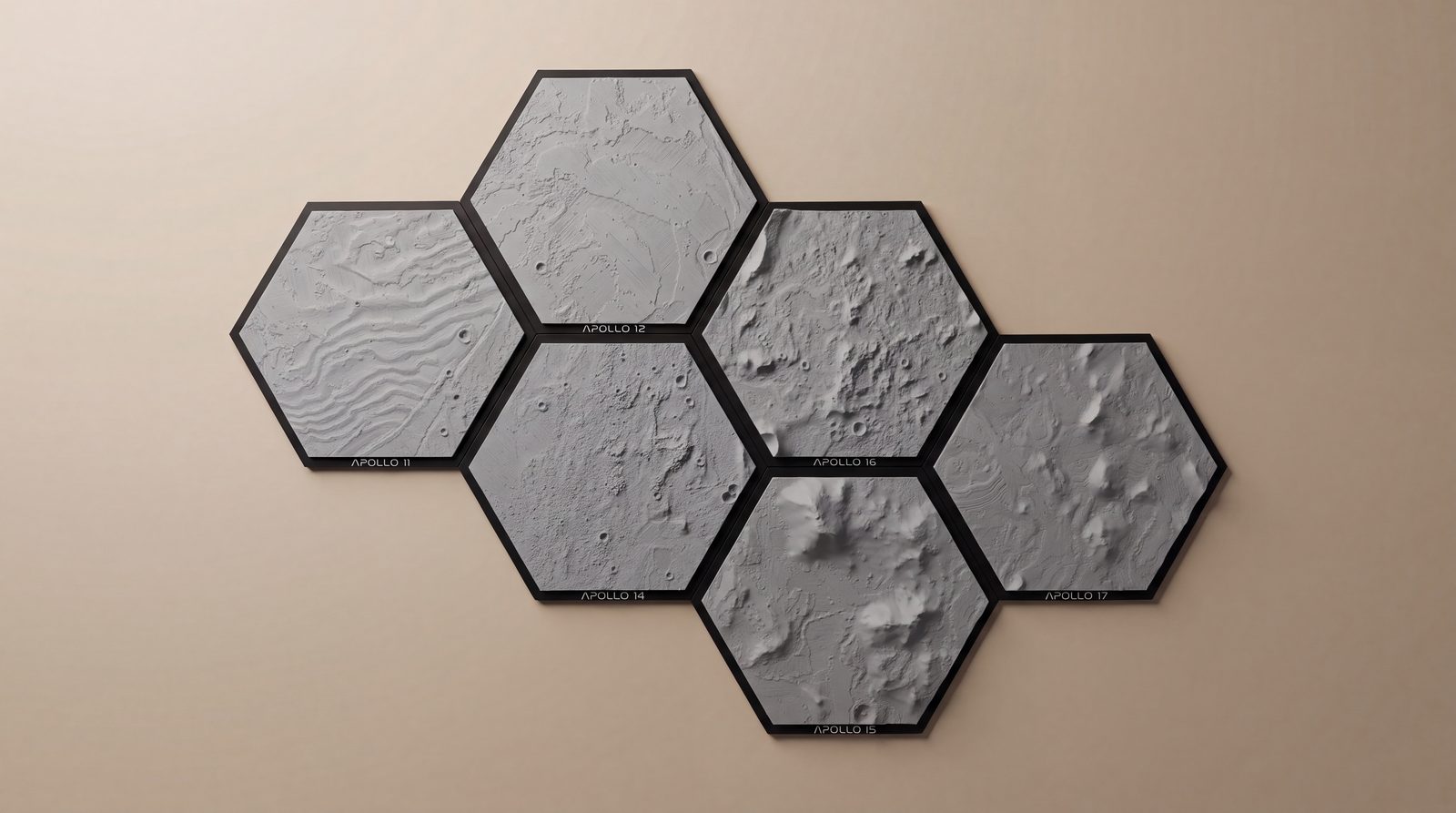
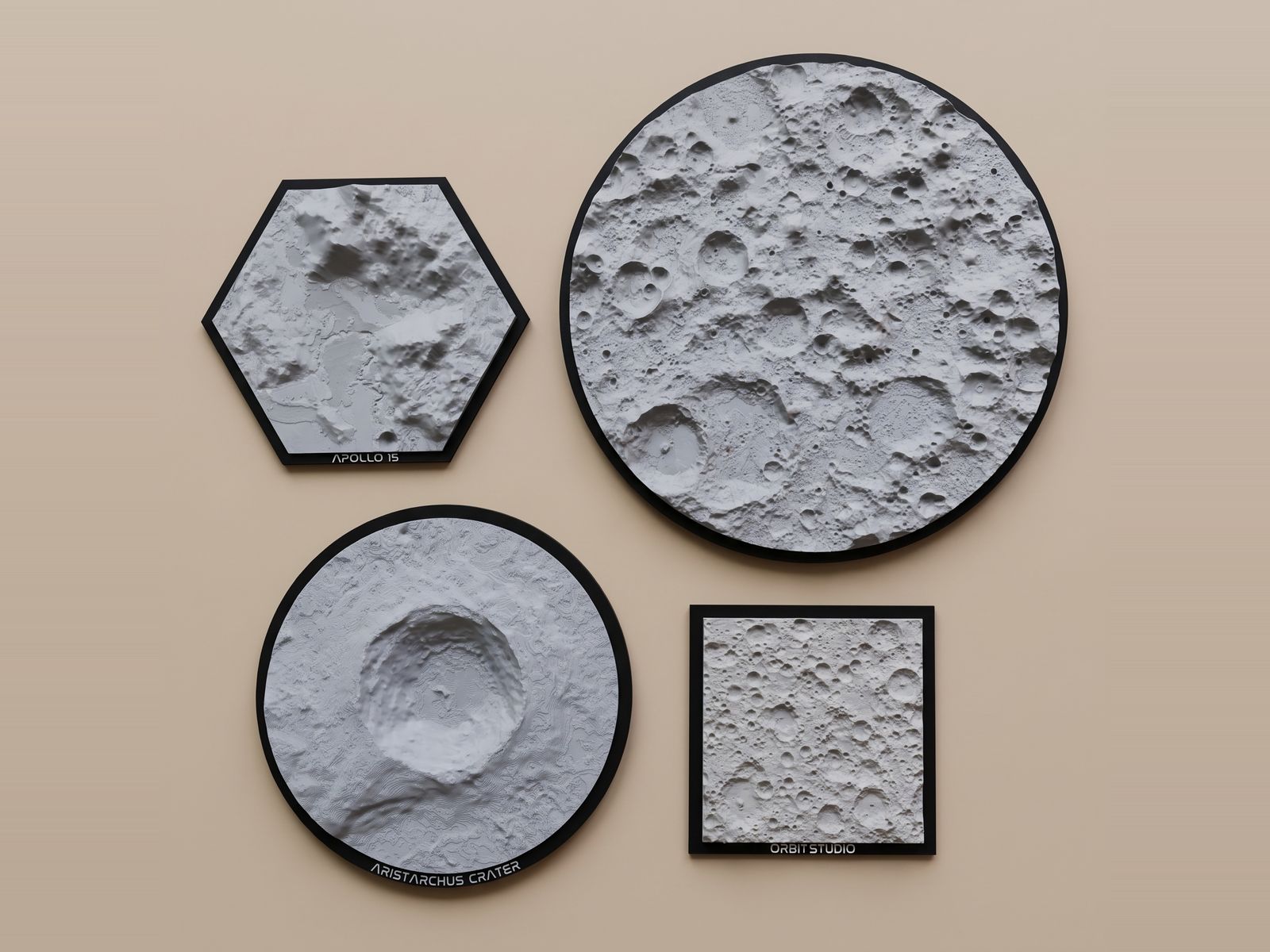
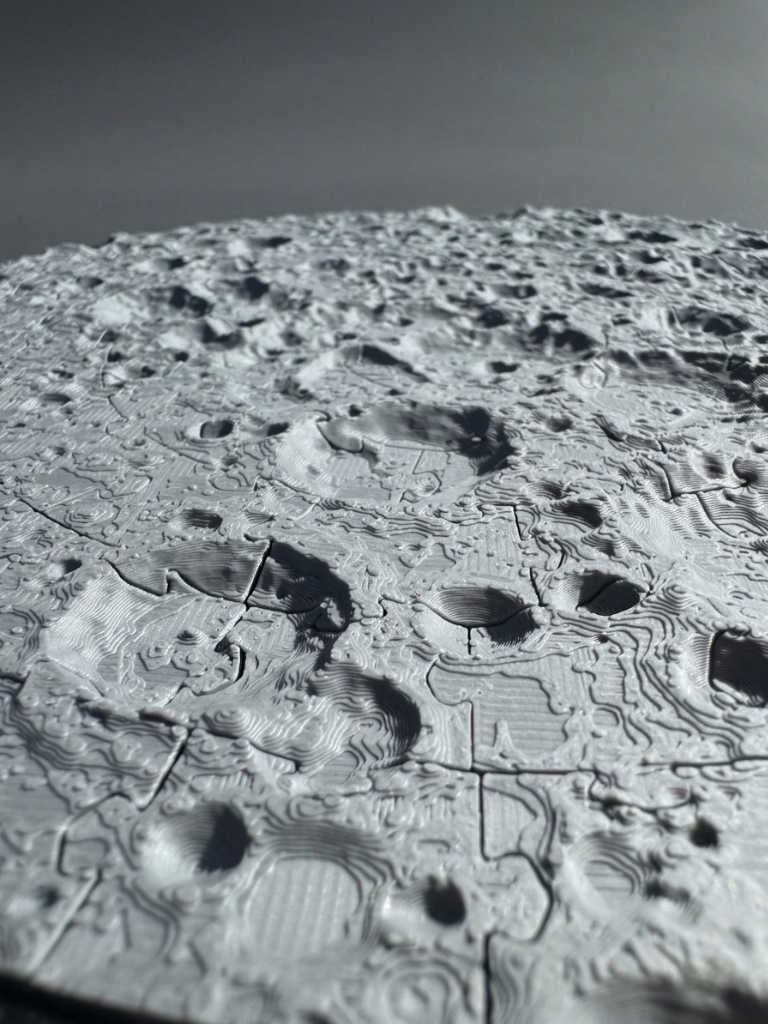
An Apollo 15 terrain jigsaw puzzle printed in gray, with loose pieces beside its black frame Apollo 15 · Moon
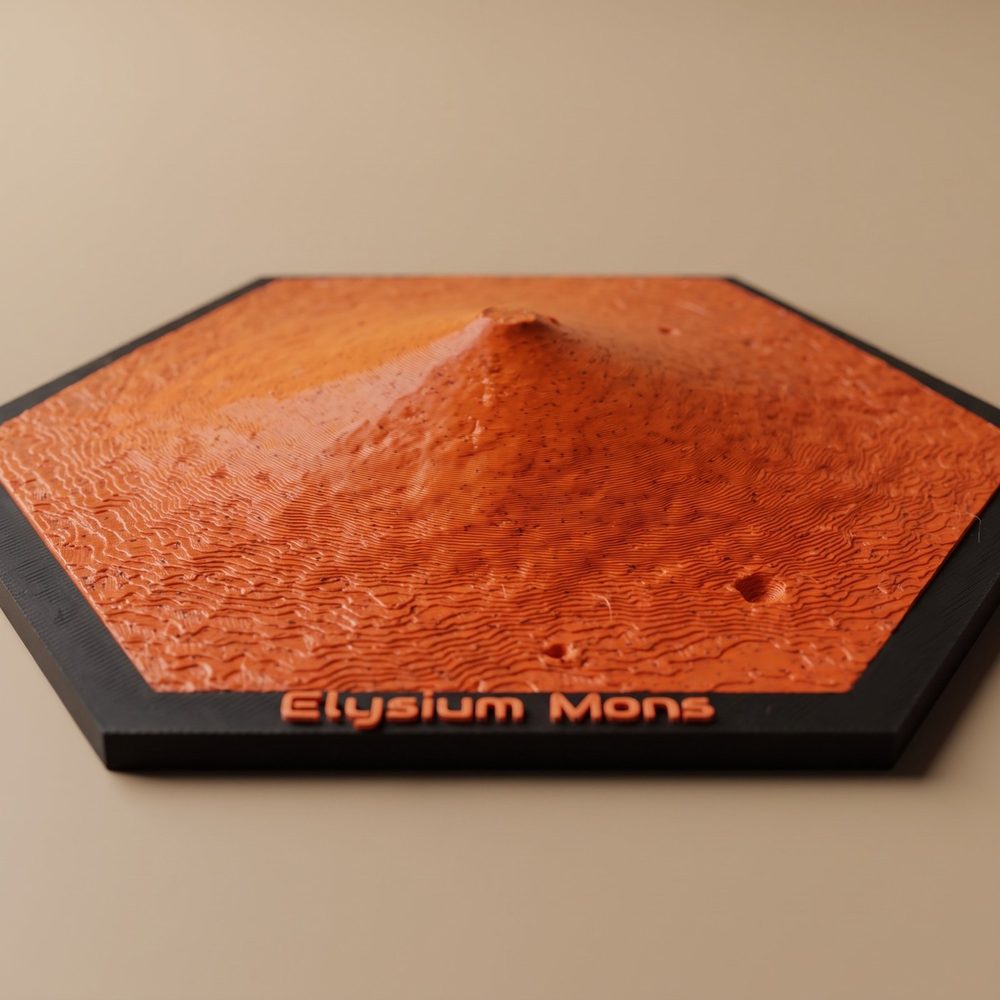
Close-up of a round Mars terrain jigsaw puzzle in red on a black frame lettered MARS, with four loose pieces beside it Mars · puzzle

OrbitStudio Terrain

Seven worlds

Pick a region on one of seven worlds and print its real terrain as a jigsaw puzzle or an ornament.

  • Real elevation data from NASA missions
  • A circle, square or hexagon, with your own frame text
  • Optional wall mount and puzzle cover
  • Multicolor 3MF, ready for Bambu Studio and OrcaSlicer
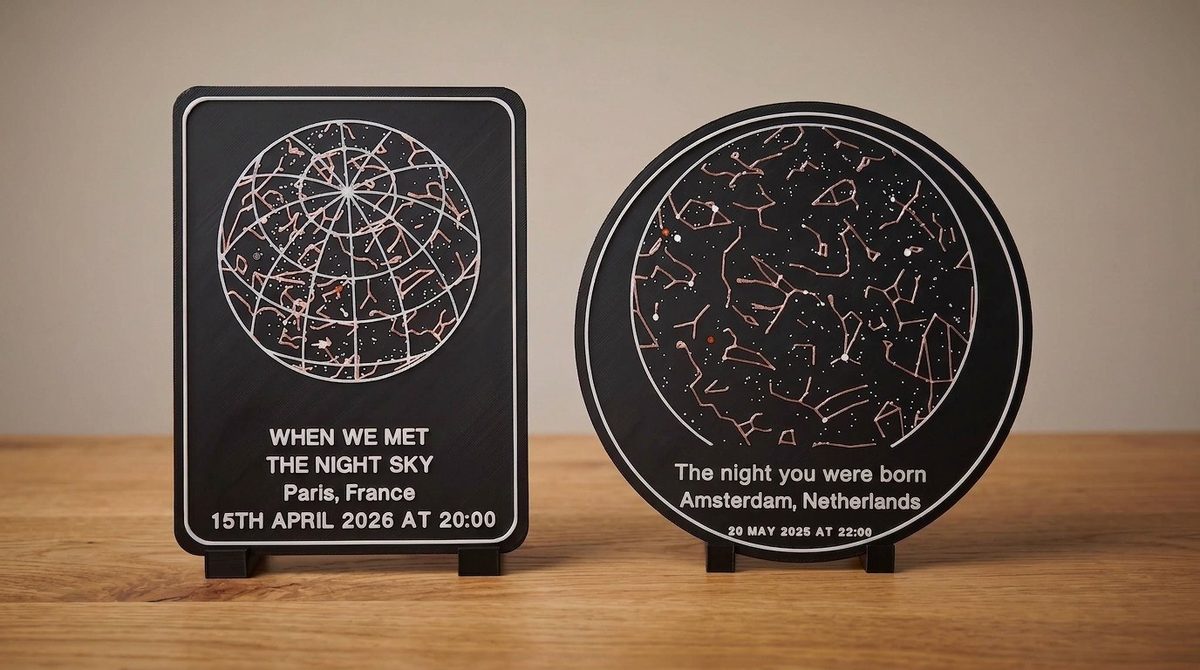
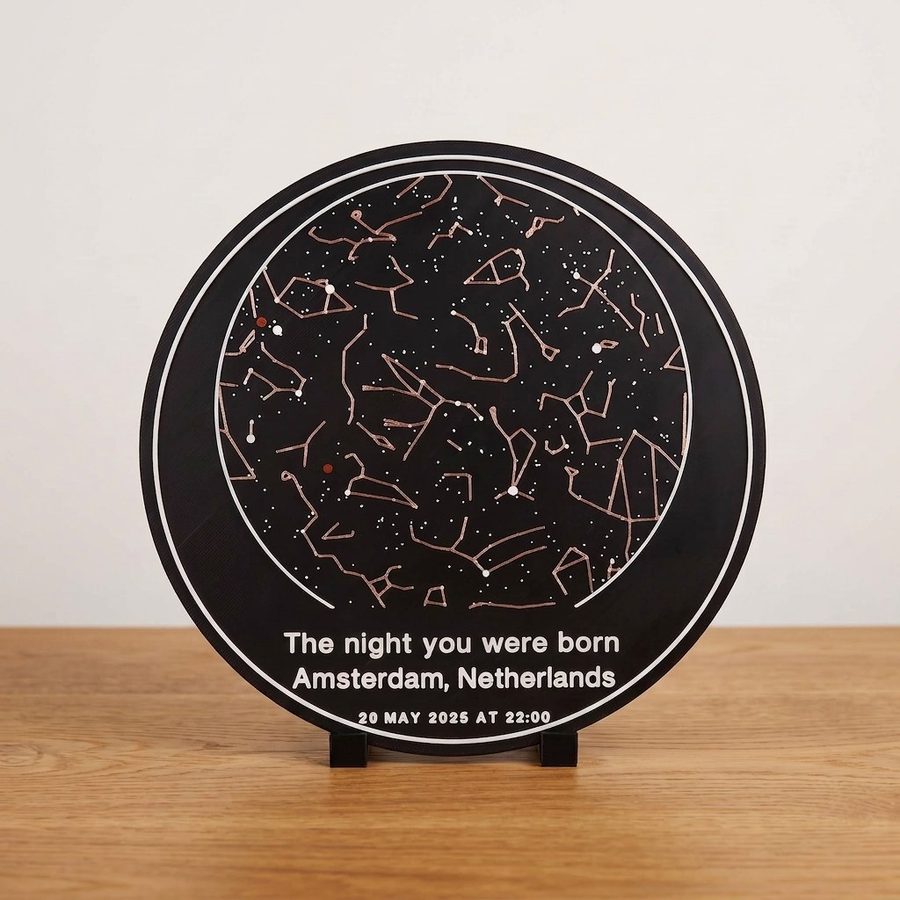
Two OrbitStudio Sky star map plates on small black desk stands: a rounded rectangle with a coordinate grid and copper constellation lines, lettered When we met, The night sky, Paris, France, 15th April 2026 at 20:00, and a round plate lettered The night you were born, Amsterdam, Netherlands, 20 May 2025 at 22:00 Paris · Amsterdam

OrbitStudio Sky

Night sky

The exact night sky over any place, at any moment, as a 3D-printed star map you make yourself.

  • Any place, any date and time
  • Stars down to magnitude 6, all 88 constellations
  • A rounded, circle, hexagon or rectangle plate, with a desk stand
  • STL and multicolor 3MF, no supports, any FDM printer
More about OrbitStudio Sky
Make your star map STL free · 3MF uses a credit

Measured by NASA missions

The Moon and Mars are where most prints start. Every world is built from a mission's own measurements, and each card names the source of its heights.

Also printable: five more worlds

  • Mercury

    Rachmaninoff basin, Discovery Rupes and the craters near the north pole that hold water ice, from pole to pole.

    NASA MESSENGER · 665 m/px See all 36 on Mercury
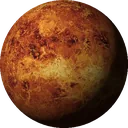
  • Venus

    Maxwell Montes, the highest mountains on Venus, and the volcano Maat Mons, measured by radar through the clouds, up to 80° north or south.

    NASA Magellan radar · about 4.6 km/px See all 39 on Venus
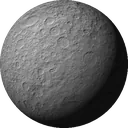
  • Ceres New

    Occator, the crater of the bright salt spots, and Ahuna Mons, a lone mountain of salty mud and ice. Dawn mapped all of Ceres but the ground around its south pole.

    NASA Dawn shape model · about 100 m See all 31 on Ceres
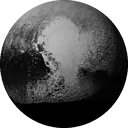
  • Pluto New

    Sputnik Planitia, the plain of ice in Pluto's heart, and the ice blocks of Tenzing Montes. Only the side New Horizons measured, about 45%, can be printed.

    NASA New Horizons stereo · 300 m/px See all 43 on Pluto
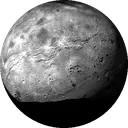
  • Charon New

    Serenity Chasma, an informally named canyon with walls over 6 km high, and mountains standing in moats. New Horizons measured about 44% of Charon, and about 20% is sharp.

    NASA New Horizons stereo · 300 m/px See all 12 on Charon

Every elevation source and map layer is credited in full, with its licence, in the data credits at the foot of this page.

Find your spot before you print it

Spin the globe or switch to the flat map — and switch worlds while you are at it. Every crater, ridge and landing site comes straight from the missions that measured them.

--.-° --.-° Locating… NASA LRO · WAC mosaic · 303 ppd

Iconic landmarks, seven worlds

Famous craters, Apollo landing sites and the largest volcano in the solar system, a click away in the generator.

On the Moon

Tycho Crater

85 km diameter impact crater

Apollo 11

Sea of Tranquility landing site

Copernicus

Prominent 93 km crater

Apollo 17

Taurus-Littrow Valley

Aristarchus

Brightest large crater

Clavius

One of the largest craters

Plato

Dark-floored lava plain

Apollo 15

Hadley Rille exploration

On Mars

Olympus Mons

610 km across, 21 km tall

Valles Marineris

A canyon system about 4,000 km long

Jezero Crater

Where Perseverance landed

Hellas Planitia

2,299 km impact basin

On Mercury

Rachmaninoff

A 305 km basin with Mercury's lowest point

Prokofiev

Water ice in a crater near the north pole

Discovery Rupes

A cliff about 400 km long

Kuiper

A young crater with bright rays

On Venus

Maxwell Montes

The highest mountains on Venus

Maat Mons

Venus's highest volcano

Artemis Corona

A ring of fractures 2,600 km across

Mead

Venus's largest impact crater, 270 km

On Ceres

Occator Crater

A 92 km crater with bright salt spots

Ahuna Mons

A lone ice volcano, about 4 km high

Haulani Crater

One of the youngest craters, 34 km

Kerwan Crater

The largest crater on Ceres, 280 km

On Pluto

Sputnik Planitia

The plain of ice in Pluto's heart

Tenzing Montes

Blocks of ice up to 6.2 km high

Wright Mons

A possible ice volcano, 165 km across

Tartarus Dorsa

Plateaus of bladed methane ice

On Charon

Serenity Chasma

A canyon with walls over 6 km high, informally named

Clarke Montes

Mountains standing in a moat

Kubrick Mons

The “moat mountain”, 40 km across

Dorothy

Charon's largest crater, 261 km

Read about 28 of them: what each one is, and how it prints

Tycho, Copernicus, the Apollo 11 landing site, Tsiolkovskiy on the farside, Olympus Mons, Valles Marineris, Gale Crater, Jezero Crater, Rachmaninoff, Prokofiev, Discovery Rupes, Kuiper, Maxwell Montes, Maat Mons, Artemis Corona, Mead, Occator, Ahuna Mons, Haulani, Kerwan, Sputnik Planitia, Tenzing Montes, Wright Mons, Tartarus Dorsa, Serenity Chasma, Clarke Montes, Kubrick Mons, Dorothy.

From a coordinate to a print

The same three steps in both tools. Nothing to install: you work in the browser and take the file to your own slicer.

  1. 01

    Pick

    A spot on one of seven worlds, or a place and a moment for the sky. The terrain side has 253 landmarks to start from.

  2. 02

    Shape it

    Choose the shape and the size, add your own frame text, and set the colors for each part.

  3. 03

    Print it

    Download an STL or a multicolor 3MF. It prints on any FDM printer, with no supports.

The campaign film: raw NASA data to a finished print

One plan, both tools

Generating costs nothing in either tool, and a star map's STL is free, so you see exactly what you would print before you pay. Downloads come with a plan, Plus for unlimited downloads or Merchant to sell your prints as well, or with a lifetime pass from MakerWorld.

Generating a model, in either tool
Free
Star map STL
Free
Star map multicolor 3MF
Plan or pass
Terrain from all seven worlds, STL and 3MF
Plan or pass
Plus from
$9.99 a month

€9.99 in euros, or $79 · €79 a year. Cancel any time.

Plus
Unlimited downloads · $9.99 a month
Merchant
Unlimited, sell your prints · $14.99 a month
Lifetime pass
Pay once, from $12, on MakerWorld

Lifetime passes are still on sale as a late pledge on MakerWorld, and a late pledge gets its code within 3 days.

See plans and pricing Or a lifetime pass on MakerWorld Already backed? Redeem your code

Behind both tools

OrbitStudio is built by SimplySolid3D, an independent 3D-printing studio based in the Netherlands.

60,000+ Model downloads
3,000+ Makers following

More from SimplySolid3D at simplysolid3d.com. Questions about OrbitStudio? Reach out at info@orbitstudio3d.com.

I'm Mike, the maker behind SimplySolid3D. I still get a kick out of seeing people print them. My goal has always been the same: make 3D printing accessible for everyone, with designs that just work — and now, the tools to make your own. Back this project, and you're backing one maker keeping a promise: models that print right the first time.
Mike, SimplySolid3D

Before you print

Is it free to try?

Yes. Generating a model is free in both tools, and so is a star map's STL. Downloading a terrain model, or a star map's multicolor 3MF, takes a Plus or Merchant plan, or one credit from a pass.

What does it cost?

Plus is $9.99 a month or $79 a year (€9.99 or €79) for unlimited downloads for personal use, and Merchant, $14.99 a month or $119 a year (€14.99 or €119), adds the right to sell your prints. Or pay once with a lifetime pass, still on sale as a late pledge on MakerWorld: Starter is $12 for 6 downloads a year, Premium $29 for 20, and Creator $79 and Merchant $199 for unlimited downloads, all compared with the plans on the pricing page too.

What files do I get, and will they work with my printer?

Every model comes as an STL and as a multicolor 3MF with the colors already assigned, ready for Bambu Studio and OrcaSlicer, and prints on any FDM printer with no supports. Always check geometry, wall thickness and supports in your own slicer before printing — printers, profiles and materials vary.

Where does the data come from?

Terrain comes from elevation data measured by NASA missions, and the world cards above name each one's source. OrbitStudio Sky's stars come from the Bright Star Catalogue, down to magnitude 6, and its constellation figures from the IAU and Sky & Telescope; the planets and the Moon on a star map are computed for the moment you pick.

What is OrbitStudio?

OrbitStudio turns real elevation data from NASA missions into 3D-printable models: pick a region on one of seven worlds and it generates a jigsaw puzzle or a solid ornament, as an STL and a Bambu Studio-ready 3MF. Its second tool, OrbitStudio Sky, does the same for the night sky.

What is OrbitStudio Sky?

OrbitStudio Sky builds the night sky over any place on Earth, at any date and time, as a star map plate: the stars down to magnitude 6, all 88 constellations, and the planets and the Moon where they stood. The STL is free and needs no account; the multicolor 3MF takes a Plus or Merchant plan or one credit from a pass, which covers that chart's desk stand and every later download of it.

Do I need an account to use it?

Not to try it: anyone can generate a terrain and preview it in 3D, and guest models are held for 48 hours, then cleared. A free account needs no validation code and lets you slice a terrain into a puzzle, add text and keep a library of three; OrbitStudio Sky needs no account to make a chart and download its STL. Downloading a terrain model or an OrbitStudio Sky 3MF takes a plan or credits from a pass.

Is there a limit to how many models I can generate?

Yes, for terrain, a fair-use limit far above normal use: 10 generations per rolling 24 hours without an account, 15 per rolling 24 hours and 300 per rolling 365 days with a free account, and 100 and 5,000 over the same two windows with a plan or credits on it. Need more? Email us and we'll normally raise it; an OrbitStudio Sky chart counts only once you save it to your library.

Can I sell prints I make with OrbitStudio?

Every plan and pass lets you print for yourself and give prints as gifts. Selling physical prints, and using photos or video of them commercially, takes Merchant, the plan or the pass; the digital files themselves can never be resold or redistributed on any tier.

Is a printed puzzle safe for kids?

Printed puzzles are not toys and are not suitable for children under 3 — small interlocking pieces are a choking hazard. Keep printed pieces away from small children and pets, and supervise older children.

How accurate is the terrain — is it real NASA data?

Yes: every world is built from NASA mission data, and each world card above names its source. Pluto and Charon can be printed only where New Horizons measured them, about 45% and 44% of each, and only about 20% of Charon is sharp; Ceres can be printed everywhere but around its south pole, where Dawn never saw the ground in sunlight. At the default 1x the heights are true to scale, which leaves many regions looking flat, so a terrain exaggeration setting lets you raise them; models are decorative representations, not survey-grade.

Can I get a refund on unused credits?

Credits and Passes aren't refundable once a code is redeemed, and they have no cash value. That's because access begins immediately when you redeem — this doesn't affect your statutory rights if something we deliver is faulty. A Plus or Merchant plan is different: within 14 days of buying it you can withdraw for a full refund, as long as you have not used it.

Can I use OrbitStudio from Claude?

Yes. OrbitStudio has a free, read-only connector in Claude's connector directory. With it, Claude can find places to print on the Moon, Mars and other worlds, suggest settings, and give you a link that opens the app with them filled in. No account is needed; the page orbitstudio3d.com/claude shows how to add it.

Can I delete my account and my data?

Yes, any time, from your account settings. We remove your account data within 30 days, except where we're required to keep records by law.

Ready to print a world — or a sky?

Pick a plan, or open either tool and generate a model first. Seeing it costs nothing.

Plans from $9.99 a month · lifetime passes as a late pledge on MakerWorld

Questions, or a print to show? Join the OrbitStudio Discord